In December 2024 WATSAN’s trustees received a detailed update from the team in Uganda on their progress on Kazuru, an ambitious scheme that will tackle the lack of safe drinking water by building a community water supply that uses gravity to supply a series of tap stands.
This major project has been the focus of WATSAN’s fundraising efforts over the past two years, and we were delighted to break the ground on the project in August 2024 during the visit from the mission team at St Peter’s Church.
Community engagement (aka “software”)
Best practice homes
A team of 10 families in the community were given a demonstration about how to organise the home environment to prioritise hygiene, equipping them to build their own at home.
The demonstration included the construction of a dish-drying rack, a bath shelter, a pit latrine, a compost pit and a tippy tap for hand washing. Afterwards, the participants built what they had learnt in their own homes, and by the end of the quarter, five homes had been completed.
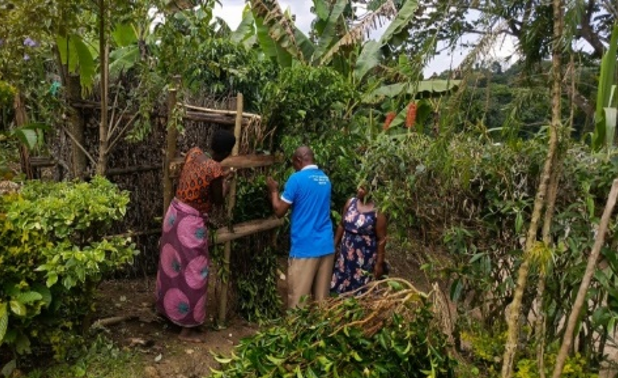
Constructing the best practice home 
Learning to make a tippy tappy 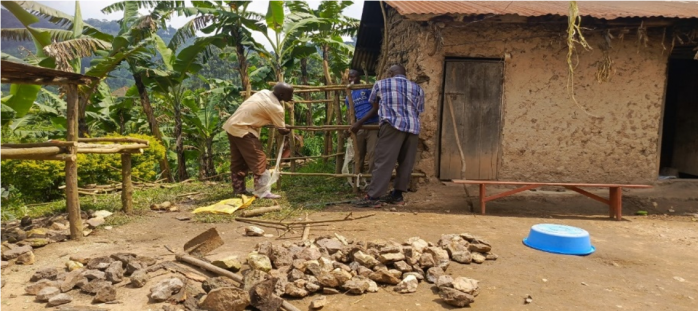
Constructing a bathing shelter 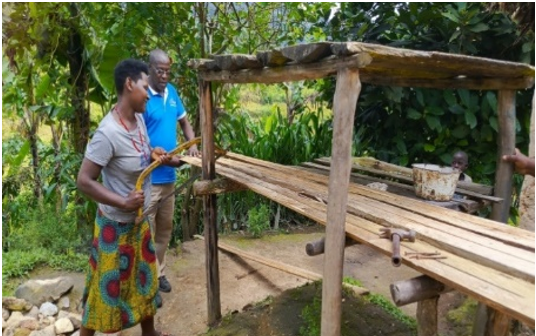
Contructing a dish-drying rack 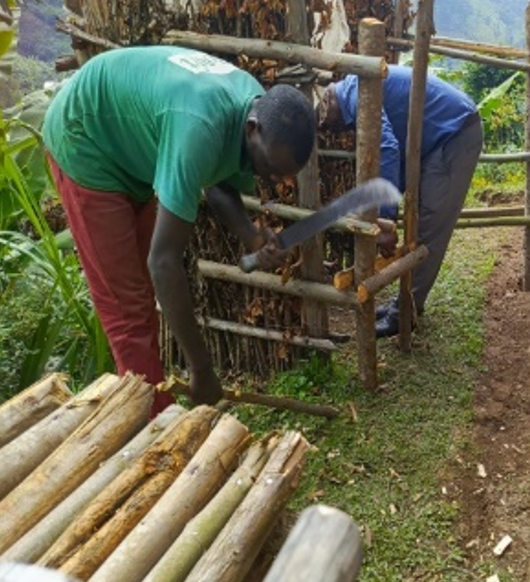
Constructing a bath shelter using tree branches
Community meetings and training
To begin the project, a meeting was held to familiarise the members of the community with their role and explain the project. Working so closely with the community means the project is genuinely empowering of them, and enables them to maintain and operate the scheme themselves, ensuring long-term sustainability of the project. A hygiene and sanitation promotion community meeting was also held where the WATSAN team explained how local people could contribute to the construction of the project, as well as covering safeguarding and child protection.
Transect walks
The team in Uganda designed a checklist of hygiene observations to look out for on ‘transect walks’ around the community, including areas such as clothes washing and rubbish disposal, and recorded their findings to be used as a benchmark for future progress.
Construction (aka “hardware”)
Tanks to collect and purify water
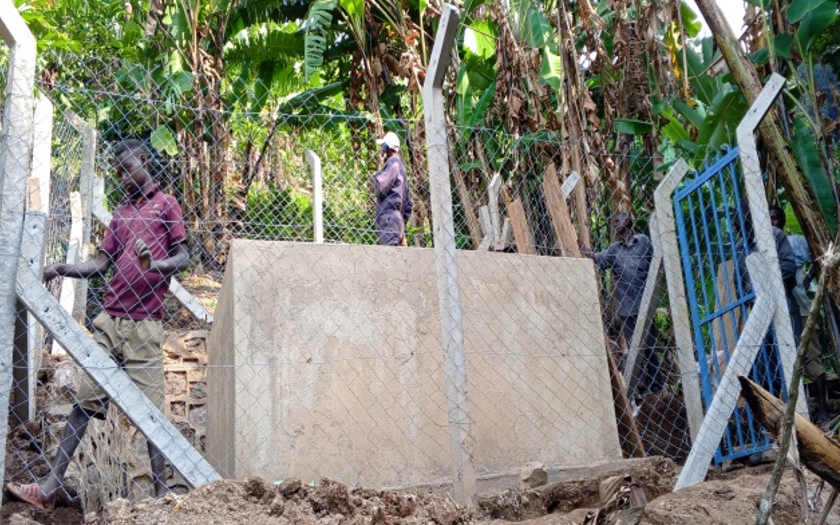
Construction of the principal infrastructure to establish the GFS is complete. This includes
- Protecting the raw water sources (“eyes”) from erosion and landslides caused by agricultural activity uphill and heavy rainfall
- Connecting these to a 2.5m3 stone masonry water intake tank, levelling the surrounding area and planting it with environmentally friendly grass
- Building a 4,500-litre stone masonry sedimentation tank downhill from the water intake tank, to enhance the filtration process, and connecting it to the water intake, including an overflow, washouts, and outlet for both tanks
- Building and connecting a sedimentation tank and a reservoir tank further downhill.
The construction work was supervised weekly to ensure progress and provide encouragement to the staff and participating community.
Adapting on the spot
Because of a change to the original scheme design and the discovery of a new water source, the position of the reservoir tank and sedimentation tank was altered during the build. This involved finding a suitable new path for the water pipeline and prepping for the excavation of trenches in the next quarter.
Looking ahead
Casting our eyes to Phase 2, the Kazuru project is still our main ask, as there is still much work to be done on the initial infrastructure that has been built in Phase 1. Phase 2 will enable more pipework to be laid to supply tap stands to key local areas such as workplaces and schools. Phase 2 will also focus on a hygiene education programme and a sanitation building exercise.
 WATSAN Uganda